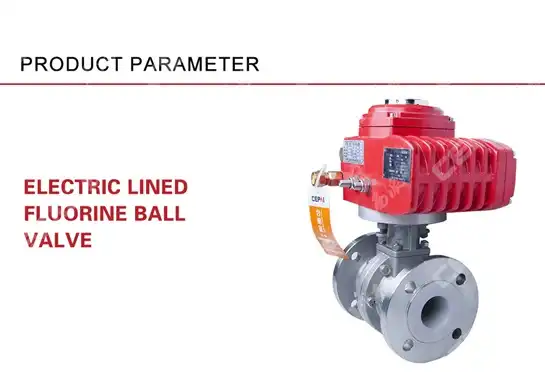
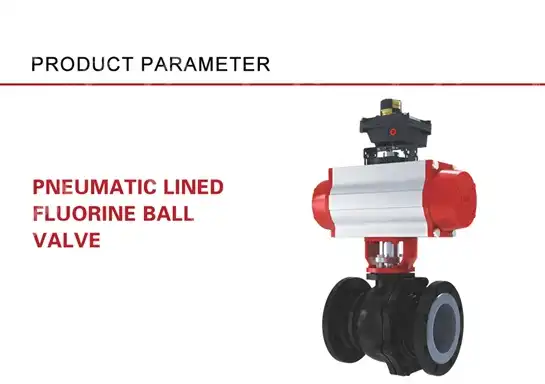
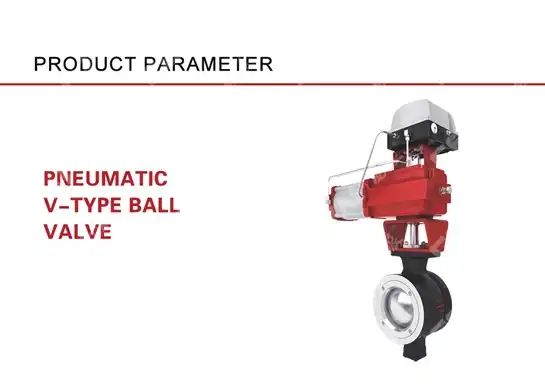
Understanding the different flow characteristics and control capabilities of O-type and V-type ball valve types is critical when deciding which to use. O-type ball valves have spherical flow passageways that excel in on/off applications with minimum pressure drop, whereas V-type ball valves have V-shaped seats or ports that enable excellent throttling control and flow modulation. These fundamental design differences have a substantial impact on their performance in many industrial applications, necessitating careful selection for maximum system efficiency.
Understanding Ball Valve Fundamentals
Ball valve design principles center around a spherical closure element that rotates within the valve body to control flow. The ball contains a bore that aligns with pipeline flow when open and blocks flow when rotated 90 degrees. This quarter-turn operation makes them highly reliable for rapid shutoff applications. Modern ball valve automation systems integrate seamlessly with industrial control networks. Advanced ball valve actuator technologies enable precise positioning and remote operation capabilities. CEPAI's intelligent manufacturing approach ensures consistent quality across all ball valve types through rigorous testing protocols. Ball valve materials selection impacts service life and performance characteristics. Stainless steel, carbon steel, and specialized alloys each offer unique advantages depending on operating conditions. Temperature ratings, pressure specifications, and chemical compatibility guide proper material selection. Ball valve sizes range from fractional inch configurations to large-bore industrial applications. Standardized dimensions ensure compatibility with existing piping systems while custom solutions address unique installation requirements.
O-Type Ball Valve Design and Performance
O-type ball valves utilize circular seats that create uniform sealing contact around the entire ball circumference. This design provides excellent bubble-tight shutoff capabilities with minimal seat wear over extended operating cycles. Flow characteristics in O-type configurations demonstrate linear relationships between valve position and flow rate. Testing data shows pressure drops typically remain below 0.5 PSI at fully open positions for standard port designs. Full port O-type valves maintain pipeline diameter throughout the flow path. Ball valve sealing performance in O-type designs relies on consistent seat compression. Spring-loaded seat mechanisms maintain optimal contact pressure across varying temperature conditions. PTFE and metal-seated options accommodate different service requirements. Installation procedures for O-type ball valves emphasize proper alignment and support. Welded, flanged, and threaded connections each require specific installation techniques to prevent stress concentration and ensure long-term reliability. If you need rapid on/off control with minimal flow restriction, then O-type configurations provide optimal performance for your application requirements.
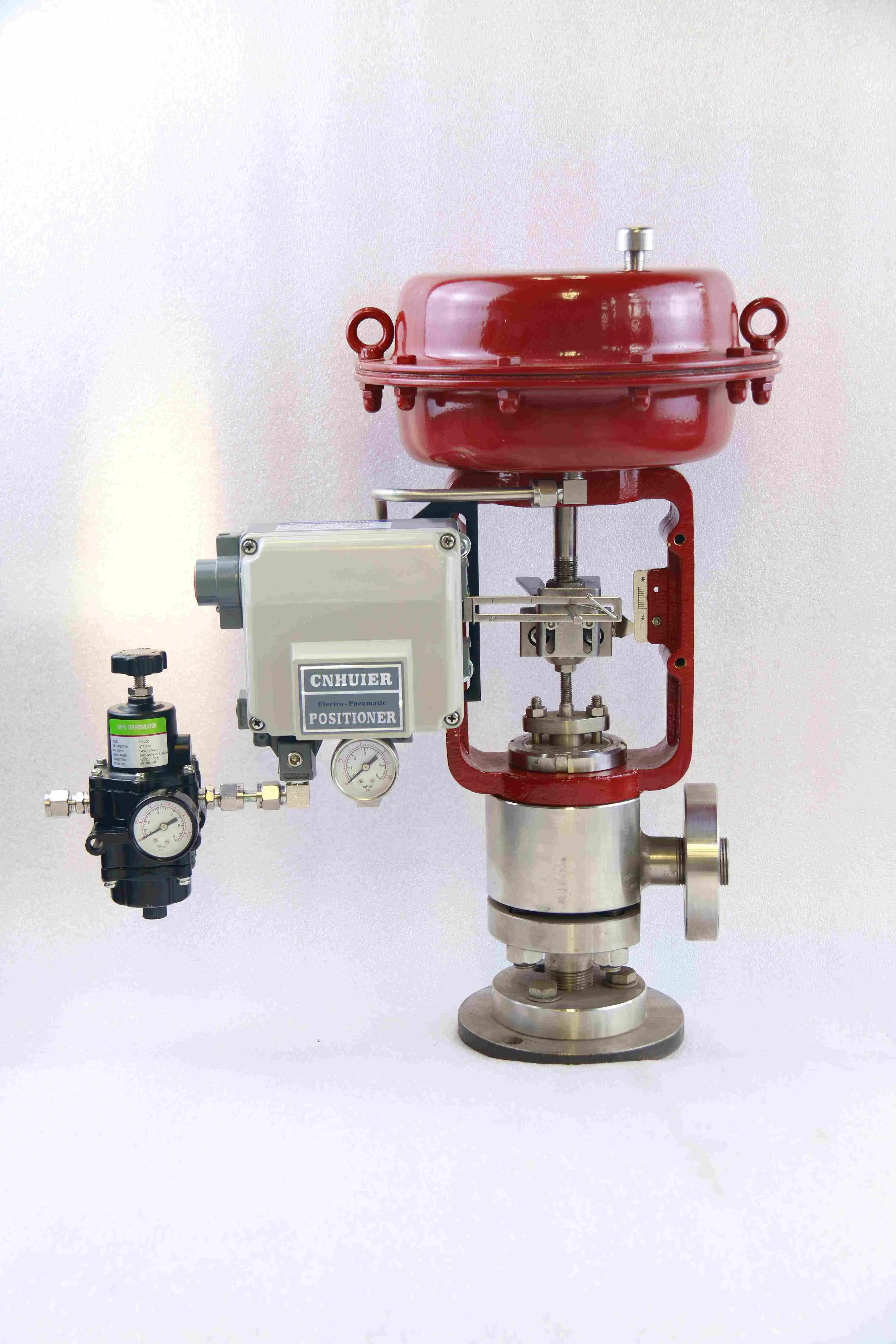
V-Type Ball Valve Features and Advantages
V-type ball valve design incorporates V-shaped seats or ball ports that create characterizable flow patterns. This configuration enables precise throttling control throughout the operating range with improved rangeability compared to standard designs. Control valve applications benefit from V-type geometry through enhanced shear action on flowing media. The V-shaped restriction creates turbulence that prevents particle settling and reduces cavitation potential in liquid services. Ball valve torque requirements in V-type designs vary significantly with position due to changing contact areas. Operating torque peaks at approximately 15-degree opening angles before decreasing as flow area increases. This characteristic enables fine control near closed positions. Maintenance advantages include self-cleaning action during operation. The V-shaped geometry creates high-velocity jets that scour seat surfaces and prevent buildup of deposits or foreign materials. Ball valve pressure rating considerations account for higher stress concentrations at V-shaped contact points. Reinforced seat designs and premium materials ensure reliable performance under demanding operating conditions. If you need precise flow modulation with excellent rangeability, then V-type ball valves deliver superior control performance for your process applications.
Flow Characteristics Comparison
Flow coefficient (Cv) values differ substantially between O-type and V-type designs. O-type ball valves typically achieve Cv values of 80-95% of pipe diameter equivalent, while V-type configurations range from 60-80% depending on V-angle specifications. Pressure drop analysis reveals distinct patterns for each design type:
- O-type: Minimal resistance at full open, sharp increase during closing
- V-type: Gradual pressure increase throughout stroke range
- Both types: Similar performance at fully closed positions
Ball valve flow control characteristics demonstrate equal percentage behavior in V-type designs versus quick-opening patterns in O-type configurations. This fundamental difference impacts control loop stability and response characteristics. Velocity profiles through each valve type show uniform distribution in O-type designs and concentrated jets in V-type configurations. These patterns influence downstream piping requirements and erosion potential. Cavitation resistance varies significantly between designs. V-type geometry naturally reduces cavitation inception through staged pressure reduction, while O-type valves require anti-cavitation trim for similar performance.
Control Performance Analysis
Rangeability specifications highlight key performance differences. O-type ball valves typically provide 10:1 control ratios, while V-type designs achieve 50:1 or higher rangeability through improved low-flow characteristics. Ball valve operation precision depends heavily on actuator selection and position feedback systems. High-resolution encoders enable positioning accuracy within ±0.1% of full stroke for both valve types when properly configured. Response time measurements show similar performance for both designs when equipped with comparable actuators. Quarter-turn operation enables rapid response regardless of internal geometry differences. Control stability analysis reveals superior performance in V-type configurations for throttling applications. The gradual flow characteristic reduces control loop hunting and provides smoother regulation. Ball valve troubleshooting procedures address common control issues. Position indication problems, actuator calibration drift, and seat leakage represent typical maintenance concerns across all ball valve types.

Application Scenarios and Selection Guidelines
Ball valve applications span diverse industrial sectors with specific requirements for each valve type. O-type designs excel in isolation service where rapid shutoff and minimal pressure drop take priority over precise control capabilities. Process control applications favor V-type configurations when throttling control is required. Chemical processing, water treatment, and HVAC systems commonly utilize V-type ball valves for their superior modulation characteristics. Ball valve industry standards guide selection processes through established performance criteria. API, ANSI, and IEC specifications define testing requirements and performance benchmarks for both valve types. Installation considerations include:
- Available space constraints and access requirements
- Actuator mounting orientation and support needs
- Pipeline stress analysis and expansion joint requirements
- Maintenance accessibility and service intervals
If you need reliable isolation service with minimal maintenance requirements, then O-type ball valves provide cost-effective solutions for your facility operations. If you need precise process control with excellent turndown ratios, then V-type ball valves offer superior performance for your automation requirements.
Advantages and Disadvantages Summary
| Feature | O-Type Ball Valve | V-Type Ball Valve |
|---|---|---|
| Flow Capacity | High (90-95% pipe area) | Moderate (60-80% pipe area) |
| Pressure Drop | Minimal when fully open | Higher due to restriction |
| Control Rangeability | Limited (10:1 typical) | Excellent (50:1 or higher) |
| Throttling Performance | Poor to fair | Excellent |
| Shutoff Capability | Excellent | Good |
| Maintenance Requirements | Low | Moderate |
Cost considerations favor O-type designs for basic on/off applications while V-type configurations justify higher initial investment through improved control performance and reduced auxiliary equipment needs.Ball valve stem designs impact both valve types similarly, with rising stem and non-rising stem options available depending on installation requirements and position indication needs. Ball valve handle operations remain consistent across both types, though V-type configurations may require higher operating torques at certain positions due to seat geometry differences.
CEPAI Ball Valve Excellence and Technical Support
CEPAI stands as a leading ball valve manufacturer with comprehensive expertise in both O-type and V-type configurations. Our intelligent manufacturing capabilities ensure consistent quality through advanced testing protocols and precision machining processes. Our ball valve product line encompasses a complete range of sizes, materials, and configurations to meet diverse industrial requirements. From standard pipeline applications to specialized process control systems, CEPAI delivers reliable solutions backed by extensive certification credentials. Key advantages of CEPAI ball valves include:
- API 6D and API 607 certified designs for oil and gas applications
- Advanced metallurgy with specialized materials for extreme service conditions
- Comprehensive testing including fire safety and fugitive emissions verification
- Custom engineering support for unique application requirements
- Global service network with rapid response capabilities
Technical consultation services help optimize valve selection for specific applications. Our engineering team provides detailed flow analysis, sizing calculations, and performance predictions to ensure optimal system integration. Quality assurance programs exceed industry standards through comprehensive testing protocols. Every valve undergoes rigorous inspection procedures including dimensional verification, material analysis, and performance testing before shipment. When selecting ball valve suppliers, consider CEPAI's proven track record in demanding applications across petrochemical, power generation, and industrial process sectors. Contact us at cepai@cepai.com to discuss your specific requirements and discover how our expertise can optimize your valve selection process.
Conclusion
The choice between O-type and V-type ball valve configurations depends primarily on application requirements for flow capacity versus control precision. O-type designs excel in high-flow, on/off applications with minimal pressure drop requirements. V-type configurations provide superior throttling control with excellent rangeability for process applications. Understanding these fundamental differences enables informed selection decisions that optimize system performance and operational costs. Both valve types offer reliable service when properly selected and installed according to manufacturer specifications and industry standards.
References
1. Smith, J.R., "Industrial Valve Technology: Design Principles and Applications," Mechanical Engineering Press, 2023.
2. Anderson, M.K., "Flow Control Systems in Process Industries," Process Technology Journal, Vol. 45, No. 3, 2023.
3. Chen, L.W., "Ball Valve Performance Analysis in High-Pressure Applications," Fluid Control Engineering, 2022.
4. Thompson, R.A., "Comparative Study of Valve Types for Industrial Automation," Control Systems Review, Issue 8, 2023.
5. Williams, D.E., "Advanced Materials in Valve Manufacturing," Materials Science Quarterly, Vol. 28, 2022.
6. Kumar, S., "Optimization of Flow Control Devices in Pipeline Systems," Pipeline Technology International, 2023.
_1746598568348.webp)